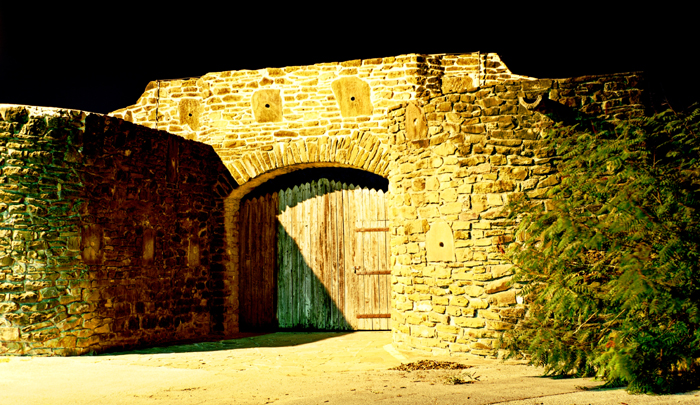
Mission San Jose at Midnight
This is an example of the rich color that can be rendered by vintage lenses. This image was taken at midnight on the grounds of the San Jose Mission in San Antonio, Texas with my 1914 No. 1 Kodak Junior. The lens is an f/4 (US System, f/8 modern system) Rapid Rectilinear designed in the later 1800s. The film is Kodak VC160, and the exposure was 4 minutes.
This was a magical might. After wending my way through San Antonio’s suburbs at midnight, I arrived at the mission grounds and made my way around ruined walls in the dark, with the hooting of an owl echoing eerily from the woods beside the mission grounds. The mission, which is well preserved and still in use, loomed above me, its ancient stone walls silver in the moonlight. As I peered through my tiny viewfinder to set up this image, a huge white owl detached itself from the trees and winged silently up to perch on the cross high atop of the cathedral’s dome. It hooted companionably to me as I set up my exposure of the floodlit entrance, then flew away as silently as it had come.